There’s a pattern I keep seeing: people arrive with solutions, implement changes, and leave. New people arrive, see the chaos, implement different changes, and leave. Eventually, someone has to pay for all these accumulated decisions, but it’s rarely the people who made them.
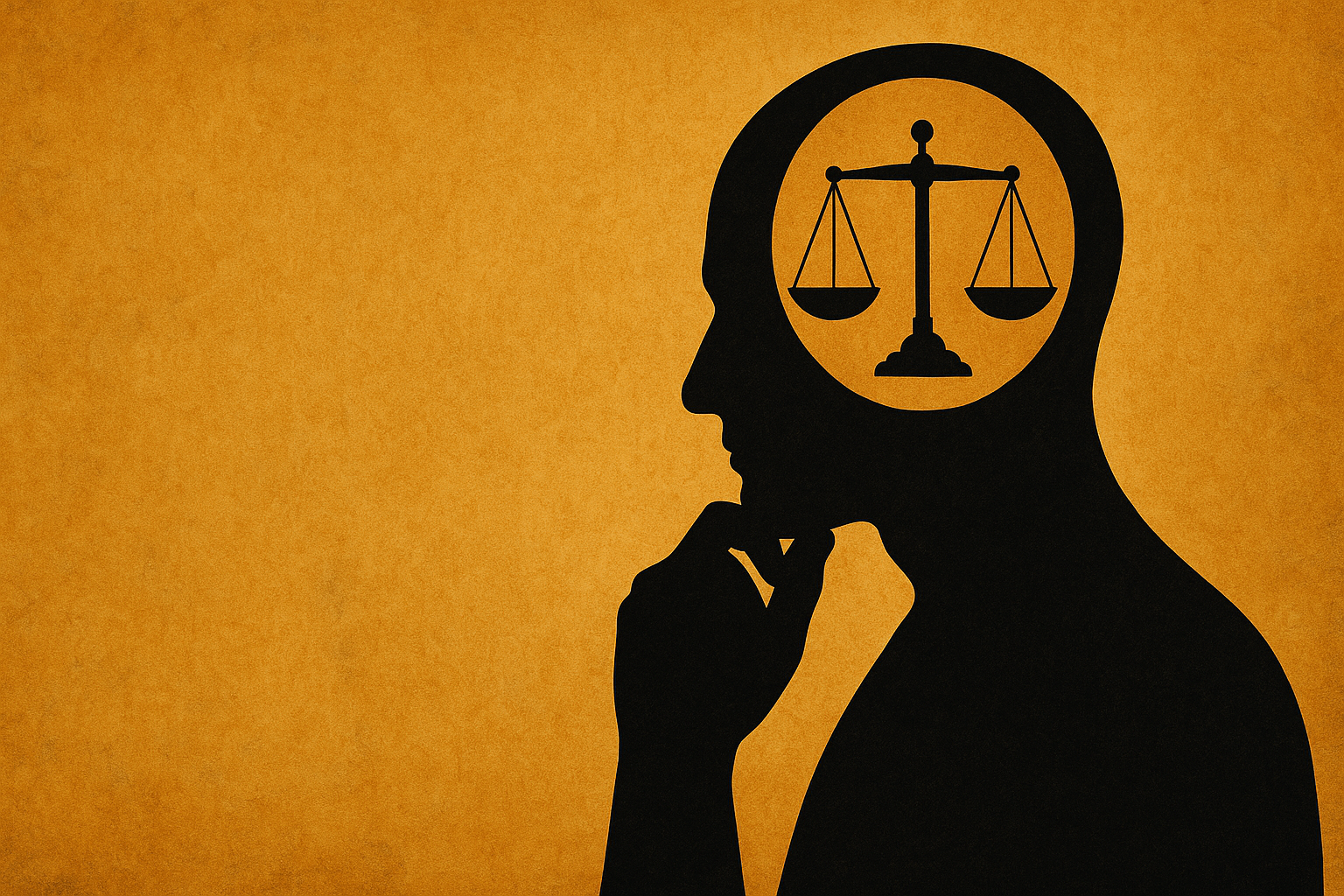
This raises a question that sits at the intersection of philosophy and management: Can an organization have a conscience? And if not, who carries the moral weight of its failures?
The Conscience Problem
As individuals, we know guilt. When I make a mistake, it stays with me. I think about it. I carry it. There’s a psychological weight to having done something wrong.
But organizations seem to exist outside this moral framework.
When leadership changes hands, the new person inherits outcomes but not culpability. They see the present state, perhaps a struggling team, missed deadlines, low morale, but not the archaeology of decisions that created it. They don’t know about the reorganizations, the reversed strategies, the ignored warnings from people who understood the problem.
The previous decision-makers? They’ve moved on. The organization itself feels nothing, it has no mechanism for feeling.
Accountability diffuses. Failure becomes “lessons learned” that somehow never inform the next decision. The cycle repeats, and those who bear the consequences are those who had the least power to prevent them.
The Question of Organizational Consciousness
Can an institution develop something like a conscience?
In philosophy, consciousness requires self-awareness and the capacity to reflect on one’s actions. A conscience adds moral weight, the ability to feel regret, to carry the burden of having caused harm.
Individuals have this naturally. Organizations, as currently constructed, cannot. They’re designed for forward motion, not moral reflection. They optimize for the next quarter, the next initiative, the next leader’s vision.
But without it, organizations become machines that consume people, drawing in those who believe they can fix things, burning them out with inherited problems, then disposing of them when the inevitable breakdown occurs.
Toward an Institutional Conscience
What would it mean for an organization to develop something like a conscience?
Memory as Moral Force: Institutional memory that includes not just what happened, but who decided, why they decided, and what they expected. Leaders documenting their reasoning in real-time: “I believed X would solve Y because Z. I was warned about A, but discounted it because B.”
Confronting the God Complex: Force confrontation with the fact that many “new” solutions have been tried before. That the person who seems to be failing might be drowning in decisions they never made.
Tracking Human Cost: How many strategic reversals has a team endured? How many reorganizations? What percentage of their problems are inherited versus created? This should be visible when someone proposes “cleaning house.”
Exit Retrospectives: When leaders leave, they predict what will happen next. These predictions get checked. When leaders are consistently wrong about what happens after they leave, that informs how we evaluate their judgment.
The Philosophical Weight
This isn’t just about better management. It’s about whether we believe organizations can be moral entities.
Right now, we treat them as optimization engines, amoral systems that make decisions based on available information, with no capacity for regret when those decisions harm people.
But organizations are collections of human decisions affecting human lives. Someone loses their livelihood because of choices made by someone who’s already moved on.
If organizations exist within a moral framework, they need something like a conscience. A mechanism for remembering not just what happened, but who it happened to and why. A way of carrying the weight of accumulated decisions.
A Modest Proposal
Maybe organizations can’t develop true conscience, that might be a category error, like asking whether a hurricane feels guilty.
But they can develop systems that function like conscience: memory that includes accountability, processes that confront leaders with consequences of their predecessors’ decisions, metrics that track human cost, culture that values stability over messianic disruption.
Not because it’s efficient, conscience rarely is.
But because decisions that affect people’s lives should carry weight. That weight should be remembered. And those who make decisions should know they’ll be remembered for them.
Who should carry the conscience of collective failure? And if the answer is “no one,” what does that say about the organizations we’ve built?